





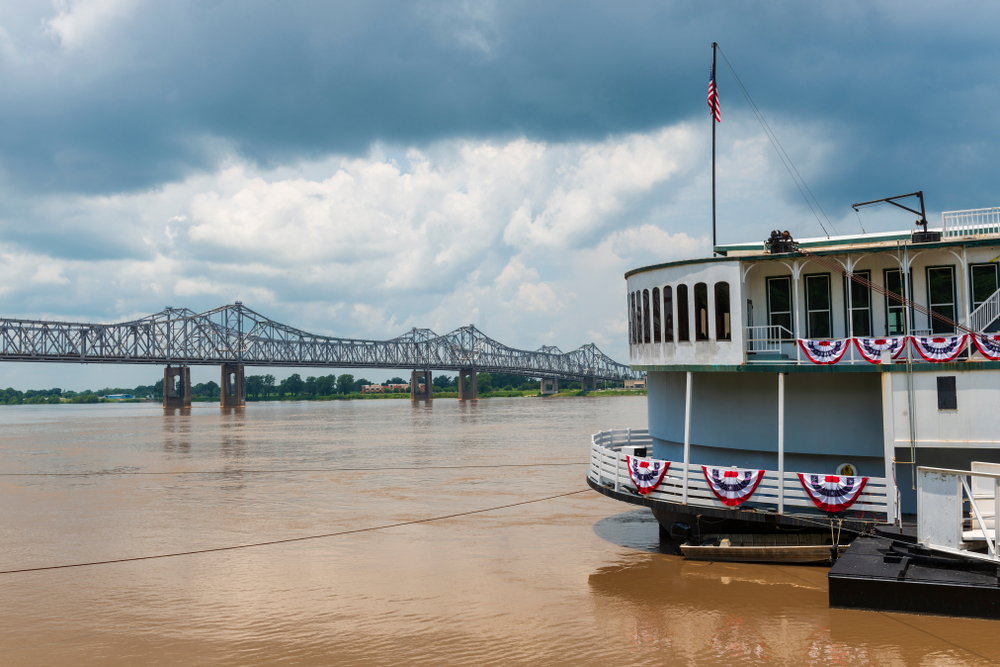
The contractor was supposed to build a levee but the project was delayed due to the river’s unexpectedly high water levels. The contractor argued the river’s water levels had made performance commercially impracticable. The ASBCA, however, didn’t buy the argument. A contract is only commercially impracticable if it’s impossible to perform or does not make economic sense. Here, while the high water levels may have made performance more expensive, it didn't make performance impossible. The contractor had a fixed-price contract and thus had to eat the extra costs.
Appeal of Phylway Construction, ASBCA No. 62961
Background
Phylway Construction had a contract with the Army Corps of Engineers for levee construction on the Mississippi River. The contract provided that Phylway would not be allowed to work on the levee when the review level exceed 11 feet. The contract further provided that Phylway would receive a time extension for periods when the river exceeded 11 feet.
Phylway had prepared its proposal based on the Mississippi’s historic water levels, assuming the river would exceed 11 feet about 80 days per year. But in 2019 when Phylway began performing, the river exceeded 11 feet for 230 days. And in 2020, the river exceeded 11 feet for 171 days. Phylway was unable for work on the project during these periods.
Phylway and the Corps executed contract modifications to extend the performance period in light of these water levels. Although Phylway had received additional time to perform the contract, it submitted a claim to the Corps on behalf of a subcontractor to recover costs associated with the delays. The Corps denied the claim. Phylway appealed to the ASBCA, alleging the contract had been constructively suspended.
Analysis
Entitlement to Compensation
As an initial matter, the board noted that the contract did not entitle Phylway to additional compensation for high water levels. The contract stated the contractor would be entitled to an extension of time for the high water levels, but nothing in the contract provided that a the contractor could recover costs incurred due to high water levels. This was firm-fixed price contract that placed the risk of loss on Phylway.
Constructive Suspension
Phylway contended it was entitled to compensation because the government constructively suspended work on the contract. Not so, said the board. The express language of the contract stated that Phylway was to stop work when the river level exceeded 11 feet. If the contract expressly allows the government to suspend word, there cannot be constructive suspension.
Commercial Impracticability
Phylway also argued that the extended high water levels made the contract commercially impracticable. But to show impracticability, a contractor must show that performance is impossible or commercially senseless. It is not enough to show that performance will result in mere economic hardship. While the high water levels may had made it harder for Phylway to perform, it had not made performance nonsensical or impossible.
Accord and Satisfaction
Lastly, the board reasoned that even if Phylway were able to show a constructive suspension, its claim would be barred. The government and Phylway executed multiple contract modifications to extend the performance period due to the high water levels. Each of these modifications contained releases, by which Phylway acknowledged that the time extension constitute Phylway’s full compensation. These releases were accords and satisfactions where the parties agreed to a substituted performance—the extension of time—in satisfaction of any claim.
Phylway is represented by Brian S. Wood and Jacob W. Scott of Smith, Currie & Hancock, LLP. The government is represented by Michael P. Goodman and Thomas M. Taff, Jr. of the Army Corps of Engineers.
--Case summary by Craig LaChance, Senior Editor